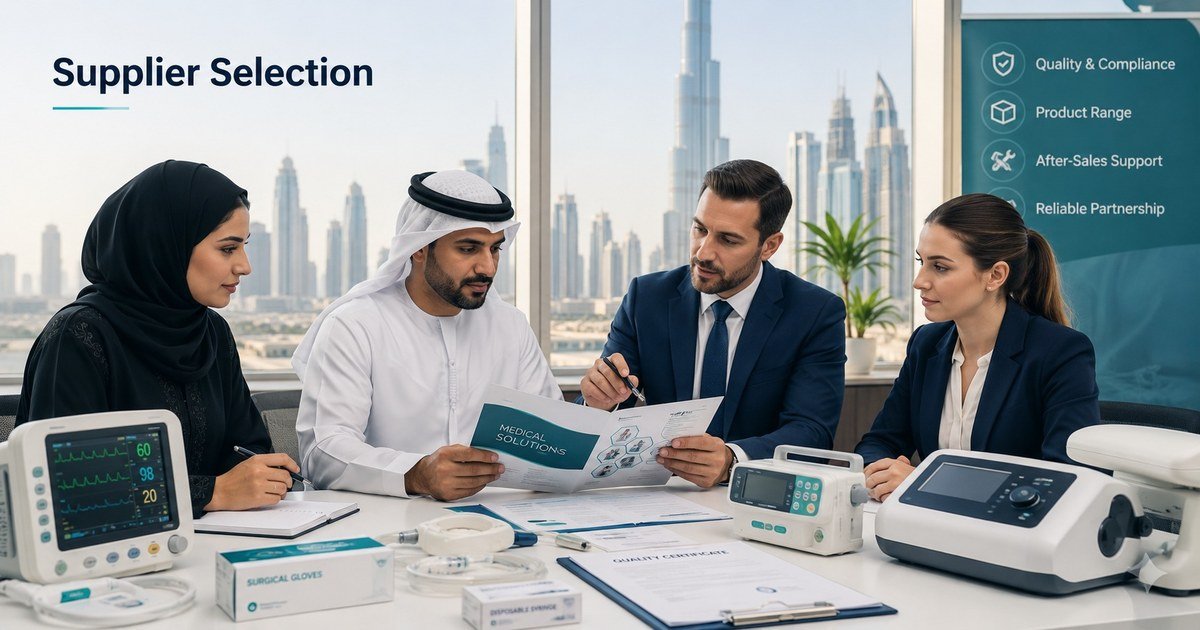
Choosing a medical equipment supplier in Dubai involves more than comparing price or the number of brands shown online. Buyers should verify the supplier’s identity, product-matching process, documentation, traceability and delivery responsibilities before placing an order.
What to check before choosing a supplier
| Check | Evidence to request | Procurement purpose |
|---|---|---|
| Company identity | Legal name, address, licence/invoice details and accountable contact | Clarifies the contracting party |
| Product capability | Exact references, brands and categories the supplier can review | Separates real sourcing capability from broad catalogue claims |
| Documentation | Product and commercial documents relevant to the order | Shows whether requirements can be supported before dispatch |
| Traceability | Reference, batch/lot or serial information where applicable | Supports receiving, complaints and recall processes |
| Delivery | Destination, commercial terms, lead-time assumptions and responsibilities | Prevents unclear shipment expectations |
| Escalation | Named contact for order, quality or urgent issues | Creates ownership when something changes |
Run a reference-specific test enquiry
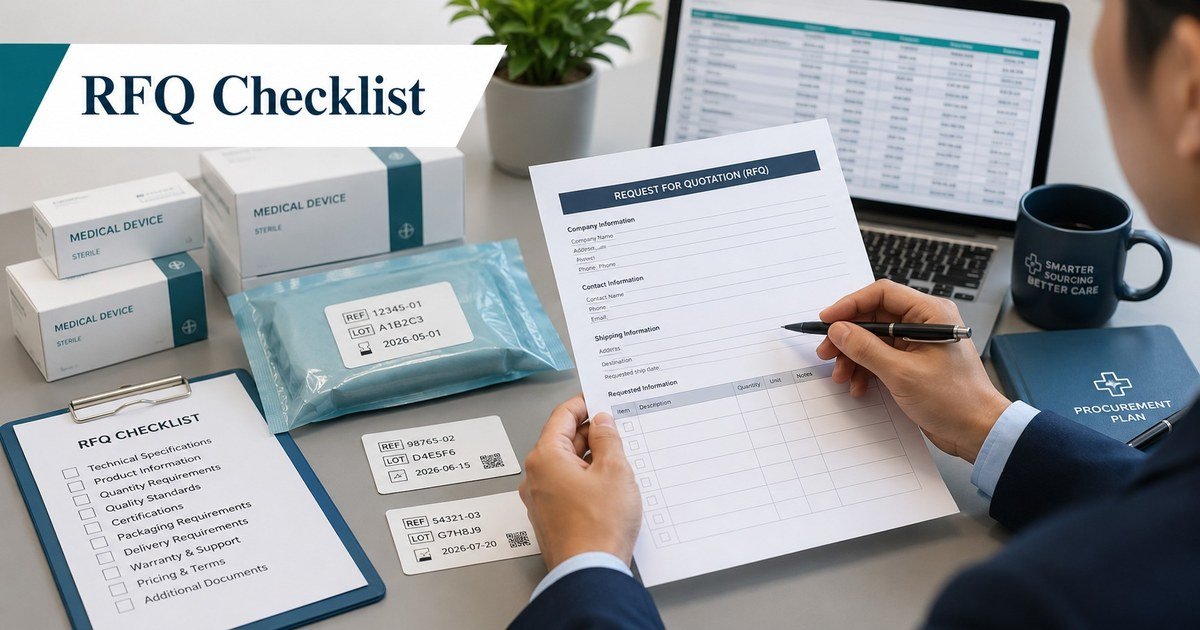
Before approving a supplier for recurring procurement, use a representative requirement. Send the manufacturer, catalogue number, size/configuration, quantity, destination, shelf-life requirement and document needs. Assess whether the response answers the same line items or silently changes the requirement.
This is especially useful for guidewires, catheters, introducer sheaths, biopsy devices and other product families where apparently similar names can represent different configurations. AJA’s current procurement service follows this reference-led model and states that quotations are checked against the exact reference, quantity, destination and commercial requirements. Review AJA’s procurement services.
Do not select on catalogue size alone
A long brand list does not by itself establish availability, authorised status, local registration or suitability for a particular destination. Ask for evidence relevant to the exact transaction. AJA’s FAQ explicitly avoids a blanket authorised-distributor claim and advises buyers to ask about the exact brand, reference and destination when authorised-channel evidence is mandatory. Read the sourcing FAQ.
Check product identity and documentation
- Manufacturer and complete product name
- Catalogue/reference number
- Size, length, diameter or configuration
- Pack quantity and required units
- Minimum acceptable shelf life
- Batch/lot or serial traceability where required
- Required certificates or manufacturer documents
- Destination-country requirements
- Commercial terms and delivery assumptions
For professional procurement, the key question is whether the quoted product can be connected to the approved requirement and the records that will be received with it. AJA describes its quality approach as an order-level process covering product identity, packaging, traceability and agreed documentation.
Dubai and UAE procurement considerations
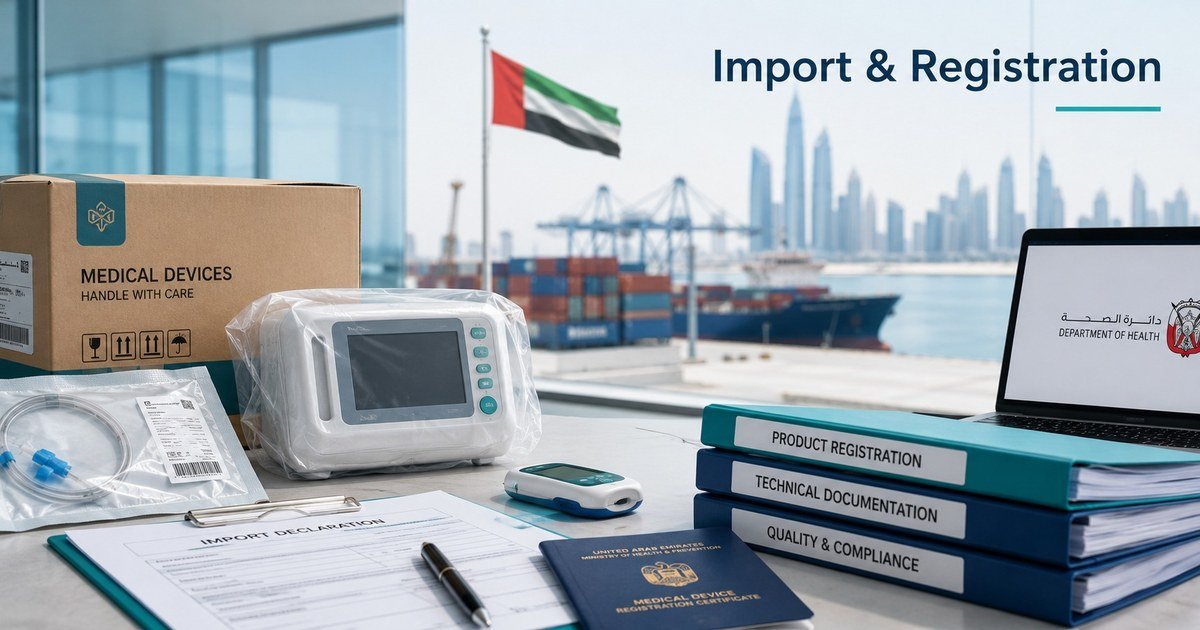
For UAE transactions, confirm current market, import and establishment requirements through the relevant official authority or qualified regulatory support. Responsibilities can differ between buyer, supplier, importer and registration holder. Do not assume that a product available internationally is automatically ready for import into the UAE.
For international sourcing, define the destination, Incoterms, import responsibility, required documents and any minimum shelf-life condition before the order is confirmed. AJA states that international delivery is subject to destination rules, carrier acceptance and agreed commercial terms.
Questions to ask a medical equipment supplier
- Can you quote the exact manufacturer reference requested?
- Can you confirm the quoted pack size and configuration?
- What shelf life can be confirmed at order level?
- Which product and commercial documents can be supplied?
- Is the offered item an exact match or an alternative?
- Which party is responsible for import permits and destination requirements?
- Who handles quality or delivery escalation after the purchase order?
Common mistakes
- Choosing a supplier because its website lists many brands.
- Comparing unit price without comparing pack quantity and exact reference.
- Assuming authorised-distributor status without evidence.
- Leaving shelf-life requirements until after quotation.
- Failing to define destination and import responsibility.
- Accepting an alternative without explicit buyer approval.
Frequently asked questions
What makes a medical equipment supplier suitable for repeat procurement?
Look for repeatable reference matching, clear documentation, traceability, responsive communication, defined delivery responsibilities and a process for resolving exceptions.
Should every supplier be an authorised distributor?
That depends on the procurement requirement and product. Where authorised-channel evidence is mandatory, request documentation for the exact brand, reference and territory rather than assuming it.
What information should I send for a quotation?
Provide the manufacturer, catalogue number, size/configuration, quantity, destination, shelf-life requirement and documents needed.
Can AJA source products not shown in its catalogue?
Yes. The online catalogue is representative rather than a complete inventory list. Send the exact reference and destination for a sourcing review.
Related resources
Send the manufacturer, catalogue number, configuration, quantity and destination for a focused sourcing review.
Editorial note: Supplier status, product availability and regulatory requirements can change. Verify current transaction-specific evidence before purchase.